
Inside the Vatican’s Exorcism Course
A psychologist’s perspective on deliverance, healing, and the human person

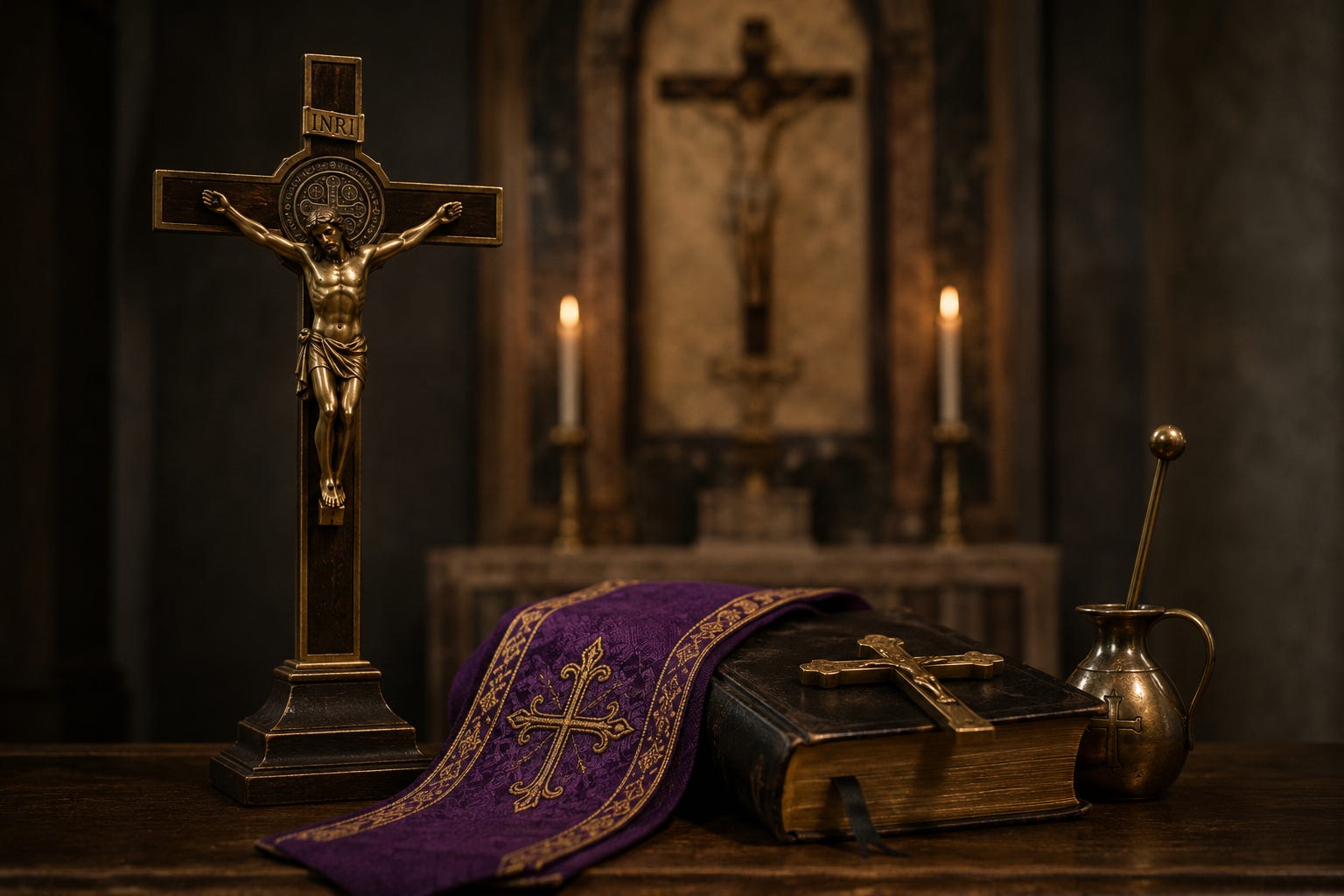
Last month I had the opportunity to speak at the annual Course on Exorcism and Prayer of Liberation held at the Pontifical Athenaeum Regina Apostolorum in Rome and organized in collaboration with the International Association of Exorcists (AIE).
The gathering brought together hundreds of exorcists, priests, bishops, physicians, psychologists, theologians, canon lawyers, and pastoral workers from around the world. For five days, participants explored questions surrounding spiritual warfare, discernment, human suffering, deliverance ministry, and the Church’s ongoing effort to better understand and serve those who seek help.
Many people imagine exorcism as a settled field with definitive answers and clearly established protocols for every situation. My experience was almost the opposite.
What struck me most was the humility of the course.
Certainly, there are principles that are well established. The Church possesses centuries of wisdom. The reality of spiritual warfare is not in question. The authority of Christ and the Church is not in question.
But there was also a shared recognition that many questions remain open.
How do trauma and demonic oppression interact?
How should psychology and spiritual discernment relate to one another?
Why do some people respond quickly to prayer and the rite while others continue to struggle for years?
What role do family systems, attachment wounds, the nervous system, and human formation play in a person’s capacity to receive grace?
Far from presenting itself as a field that has already solved every problem, the course felt more like a serious academic and pastoral effort to continue learning from experience, research, theology, and clinical observation in pursuit of the truth.
As a psychologist, I found myself increasingly convinced that many of the questions we face in deliverance ministry are not simply questions about demons. They are questions about persons.
What makes a human being capable of encounter with God?
Why do some people seem able to receive healing deeply while others remain trapped in repeating cycles of suffering?
What belongs to the priest? What belongs to the psychologist? And how can those roles work together without confusion or competition?
These were the questions I was invited to address in my presentation.
The talk that follows represents my attempt to articulate a more integrated vision of the human person—one that draws from Catholic theology, psychology, trauma research, and years of clinical work alongside priests, bishops, and exorcists.
Whether one agrees with every conclusion or not, my hope is that it contributes to the same spirit I encountered throughout the week in Rome: a sincere desire to understand the human person more fully so that Christ’s healing can be received more fruitfully.
The title of the presentation was:
“The Psychologist and the Exorcist: Integration, Identity, and the Battle for the Human Person”
The full text is included below.
